

Table of Contents
ToggleFirst Aid Training in Schools: Benefits, Importance & Need
Accidents in schools are common whether it’s a minor fall, choking incident, or a sudden medical emergency. In such situations, a quick and effective response can make a significant difference.
This is where first aid training in schools becomes not just important, but essential.
By equipping both teachers and students with life-saving skills, schools can create a safer environment to reduce risks, and ensure immediate response during emergencies.
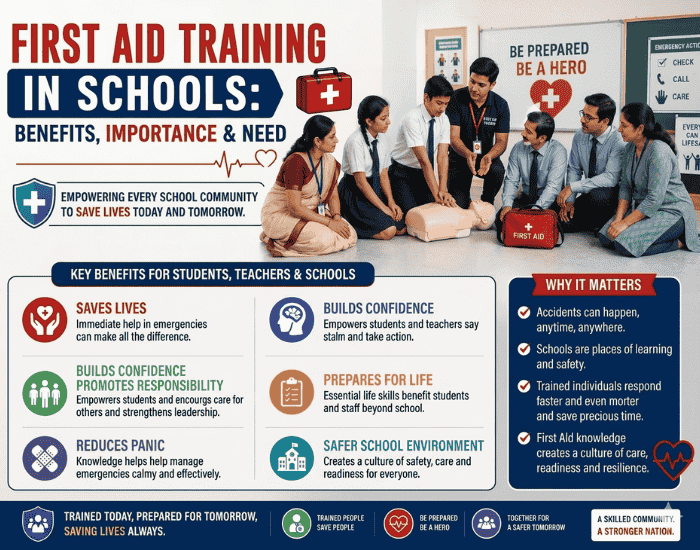
Why First Aid Training is Important in Schools
Every school is responsible for the safety of its students, and safety is not just about rules—it’s about being prepared.
First aid–trained schools are better equipped to handle emergencies by:
- Providing an immediate response before medical help arrives
- Reducing the severity of injuries
- Building confidence among teachers and students
- Preventing panic during emergencies
What is First Aid Training?
First aid training is the process of learning how to provide basic medical assistance in emergencies such as Cuts and bleeding, burns, fractures, choking and cardiac arrest (CPR).
It combines both theoretical knowledge and practical skills, enabling individuals to respond quickly and effectively.
Benefits of First Aid and CPR Training for Students
- Builds Confidence & Responsibility
Students become more aware and responsible when they know how to handle emergencies.
- Life-Saving Skills at an Early Age
Learning CPR and first aid techniques at a young age can make a real difference in critical situations.
- Promotes Safety Awareness
Students become more cautious and proactive about safety in school and at home.
- Encourages Quick Decision-Making
Training helps students stay calm and act wisely under pressure.
Importance of First Aid Training for Teachers
Key Advantages:
- Handle classroom injuries effectively
- Provide immediate care during accidents
- Manage health emergencies like asthma attacks or fainting
- Ensure student safety until medical professionals arrive
Why Schools Must Implement First Aid Training Programs
- Creates a Safe Learning Environment
A trained school staff ensures that safety is always a priority.
- Reduces Risk and Liability
Proper training minimizes the chances of severe injury and legal complications.
- Enhances School Reputation
Parents prefer schools that prioritize student safety and well-being.
- Compliance with Safety Standards
Many institutions are now required to follow health and safety guidelines, making training essential.
Common School Emergencies Where First Aid Helps
- Playground injuries
- Nosebleeds
- Burns in science labs
- Food choking incidents
- Allergic reactions
Steps to Implement First Aid Training in Schools
- Partner with certified training providers
- Conduct regular workshops for staff and students
- Include practical demonstrations (CPR, bandaging)
- Install first aid kits across campus
- Schedule refresher training sessions
Conclusion
First aid training in schools is no longer optional—it is a necessity in today’s world. By training teachers and students, schools can build a safe, prepared, and confident learning environment.
First aid training in schools is no longer optional—it’s a necessity. By educating teachers and students, schools can build a safe, prepared, and confident learning environment.
If your school is looking to implement professional training programs, Magic Eye First Aid, an ISO-certified training provider, offers CPR and first and Basic Life support course, and first aid training specially designed for educational institutions.
While not mandatory everywhere, many education boards strongly recommend it as part of school safety programs.
Students as young as 10–12 years can start learning basic first aid skills.
Basic training can take a few hours to a full day, depending on the course.
Certified organizations and professional trainers offer structured training programs.